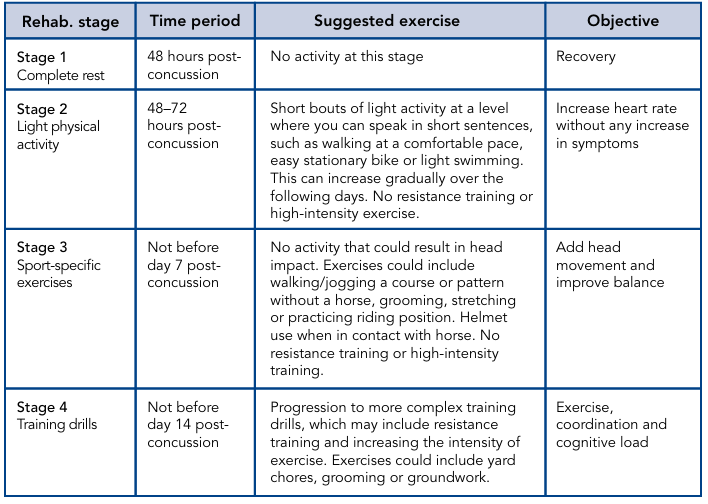
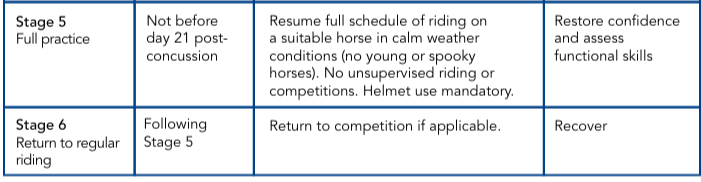
Returning to Riding

Information supplied by British Equestrian


The participant should not move onto the next stage in the recovery pathway if any symptoms 
are still in effect or become evident during the activity or the following day. If symptoms are 
experienced either during the activity or the following day after introducing a new activity, return 
to the stage where symptoms were not triggered and only move to the next stage when you are 
able to do so without experiencing any symptoms. 

Higher dressage marks?

If you want higher marks, check out Nikki Herbet's run-throughs!

Prepare to jump

Check out this course ready warm-up exercise 

Improve by watching others

Watch from the comfort of your own home

Further Help
If concussion symptoms aren’t improving after 21 days, see your GP. Depending on your symptoms and their examination findings, they may choose to offer treatment or refer you to a specialist concussion service for further investigation and treatment. Some of these services will be consultant-led and allow access to further investigations, while others will be specialist physiotherapy-led. The majority of these services won’t be available through the NHS. Deciding on the most suitable service is best done in conjunction with your GP.

Further Information:
- Concussion and return to riding guidelines
- How to recognise concussion

For further details and a useful pocket guide to Concussion, please see the British Equestrian Page.

Ready to take the next step?

Whether you're preparing for your first event or looking to build on your experience, BE Prepared gives you free access to expert coaching videos, practical guides, downloadable checklists and event-day advice to help you train smarter and compete with confidence.