
Grazing
Oct 8
Expert Advice from Baileys Horse Feeds, Official Feed Partner to British Eventing
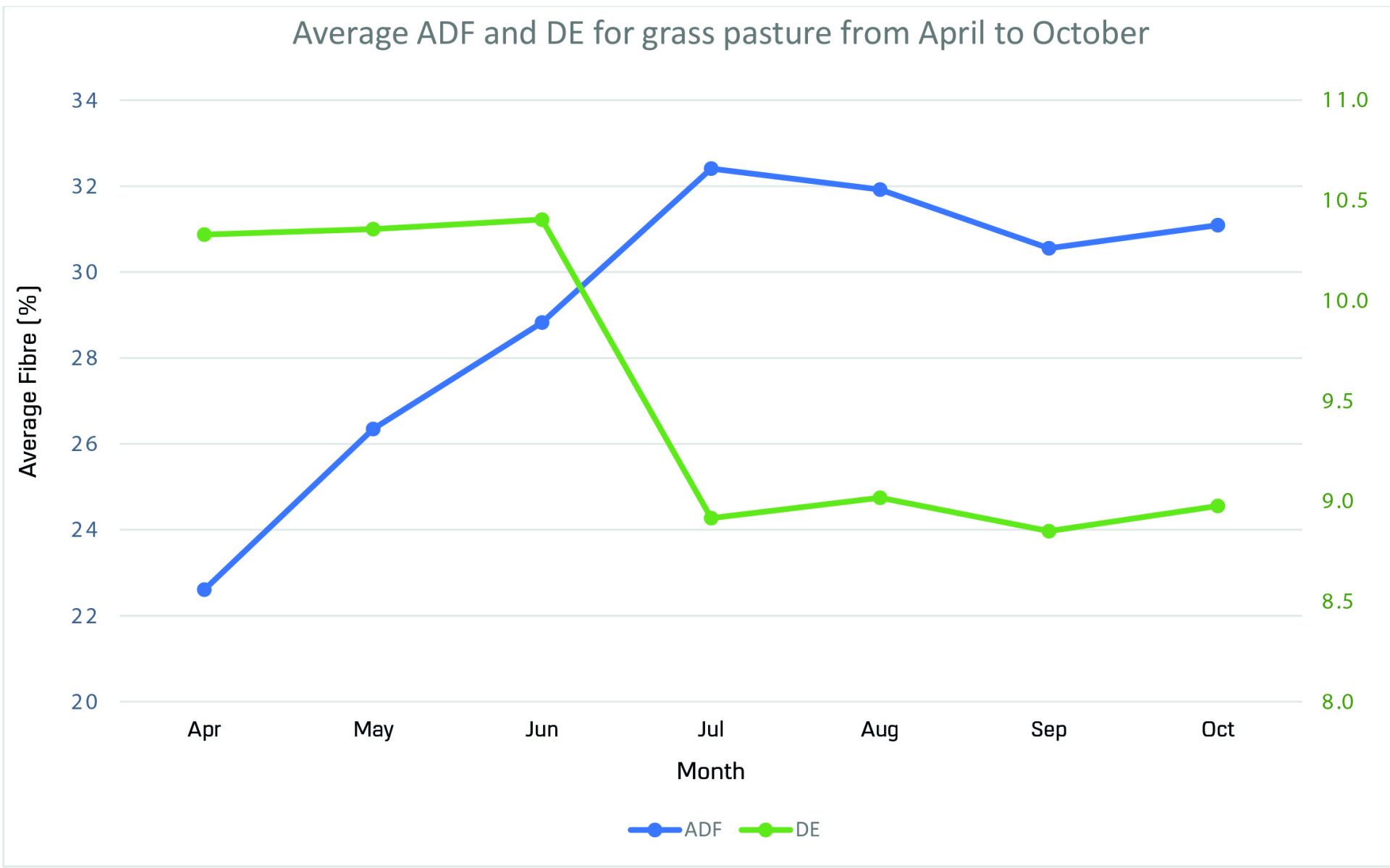
We tend to forget what a rich source of calories grass can be; it will typically have a higher Digestible Energy (DE) content than hay or haylage, while our own extensive analyses of grass pasture samples, over the years, show how the nutritional content of grazing does change throughout the year and can vary from paddock to paddock.
As grass grows more rapidly in the spring and early summer, it produces higher levels of water soluble carbohydrates (wsc), like sugars and fructans, which provide readily available calories for the horse. Fibre levels are lower, at this time of year, and increase as the grass plants mature through the summer, with more stem and less leaf - the more mature the grass plants, the greater the proportion of indigestible structural fibre in the stems.
It's hard to know exactly how much grass a horse or pony eats in a set period, but it’s estimated that they can consume between 2.25kg and 4.5kg of fresh grass per hour, which is 0.45kg to 0.9kg of dry matter, because grass is around 80% water. If they’re out for 8 hours, this can amount to 3.6kg to 7.2kg dry matter, the equivalent of 0.7% to 1.4% of bodyweight for a 500kg horse so, when if you’re having to restrict their intake to 1.5% of bodyweight, they could be consuming a huge proportion of that in the field! This is why restricting grass intake is so important for good-doers, especially those needing to lose weight.
Limiting calories from grass pasture
A “Starvation” Paddock
A “starvation” paddock is typically one which has been consistently grazed so hard that it has very little grass on it or may simply have poor quality grazing or areas of bare earth. Heavily grazed pasture often results in grass which is stressed and rarely gets a chance to produce much stem as it simply keeps replacing the leaves which are constantly eaten off. This type of grazing can, therefore, often contain higher levels of wsc (sugars and fructan) per kg, than longer grass but it is the total amount that the horse consumes which matters.
- Starvation paddocks tend to need to be reasonably small, in order to reduce the total amount of grass available.
- A horse is likely to consume much less short grass, over a period of time, than they will of easier-to-eat, longer grass, therefore consuming fewer calories.
- When grass is really sparse, additional forage will need to be provided during turnout time, to supplement the limited grazing and to maintain fibre intake.
- Ensure there is adequate shelter and shade and position water and any supplementary forage far apart, to encourage movement between the two.
PROS
- Easy to do
- Economical
- Effective for supporting weight loss
CONS
- Restricted paddock size reduces the horse’s ability to roam
- Can get poached in winter
- May not be ideal for more than one or two horses/ponies together due to limited space
Strip grazing
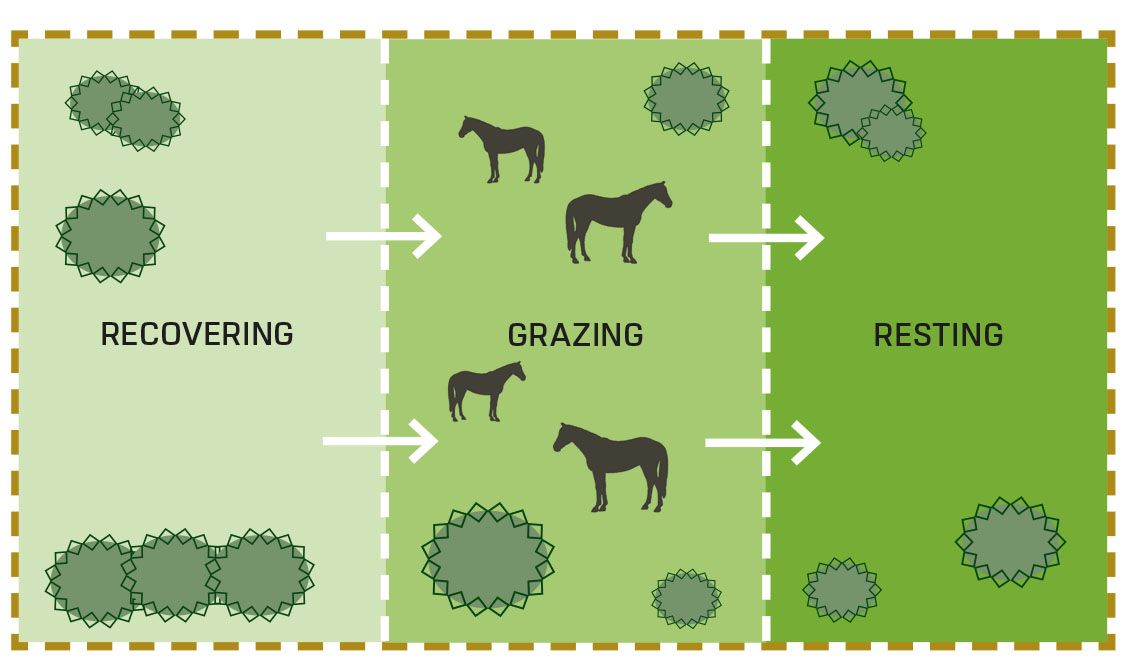
Strip grazing has been found to significantly reduce grass intake and also limit weight gain and increases in Body Condition Scores, compared to free access grazing on a larger pasture area.
- Using electric tape or temporary fencing, section off a ‘strip’ of pasture, the size of which will depend on grass availability and number of horses.
- With a ‘forward fence’ and a ‘back fence’, move both in the same direction periodically – this provides controlled amounts of fresh grass, while allowing grazed pasture to recover.
- Make sure there is adequate shelter and access to fresh water at all times.
- Moving the forward fence as a whole, having the water trough or buckets at the opposite end to fresh grass, an L or U-shaped paddock, or natural obstacles will all encourage movement.
PROS
- Easy to do
- Economical
- Effective for supporting weight loss
CONS
- Restricted paddock size reduces the horse’s ability to roam
- Fences need to be checked daily
- Time-consuming to move fences periodically
- Potentially a slower recovery of grazed pasture
- Smaller paddock sizes may increase bullying in the herd
Ever wondered what stretches to do?
You'll be there new best friend - it involves carrots!
Understanding Fatigue
Prioritising your horse, even the best-conditioned horses can experience fatigue
Do you wonder how horses learn?
No need, we have the answer- learn from Gemma Pearson.
Track Systems
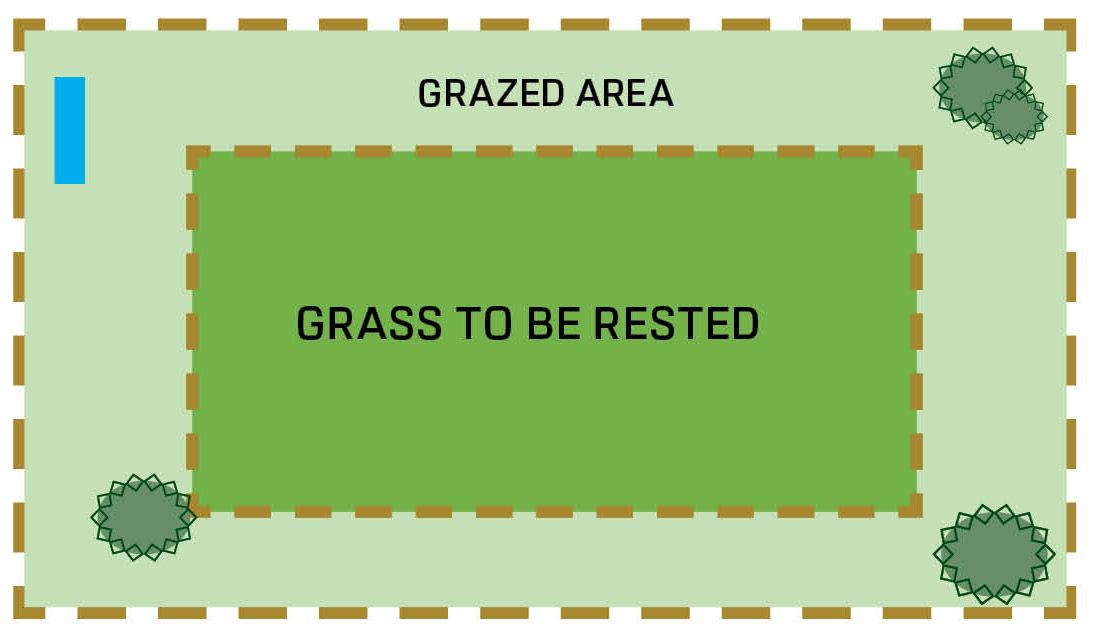
This is a similar set-up to strip grazing but, instead, an inner fence (usually electric taping) is placed in the centre of the paddock to form a ‘track’ between this fence and the outer perimeter, which encourages more movement as the horse navigates round the track to eat.
- A wider track may be required for a larger number of horses, to reduce the chance of more dominant horses cornering others on tighter tracks.
- This method could be combined with strip grazing, by slowly making the inner fenced area smaller and widening the track as the grass is eaten down.
- Avoid complex ‘zigzag’ tracks as some horses may become stressed.
- Adding enrichment, like logs, scratching posts, cones or trotting poles, can help to increase movement and interest. If you have your own yard, incorporating woodland areas (with supplementary forage) into your turnout area, can also be helpful, or even including natural obstacles, like a pond!
- Placing hay in the bushes to encourage your horse to forage for it can also keep them going for longer. Just remember to make sure that any plants within turnout areas are not toxic to horses.
- Some livery yards now offer “track livery”, having invested in all-weather surfacing and communal shelter, with the provision of ad lib forage and little or no access to grazing.
PROS
- Encourages movement and increased exercise compared to traditional strip grazing methods
- Horses may be able to be turned out for longer periods
- Allows for social interaction with other horses
- Underweight horses can potentially be grazed on the inner section to allow a higher calorie intake, while still being able to see their companions on the outer track
CONS
- May be less effective at encouraging weight loss as total grazing area may still be large
- May increase bullying within the herd
- Track area may become muddy and new grass growth may be reduced
TOP TIP
‘Poo-picking’ is a useful way to monitor how much your horse or pony is eating! If you know how many droppings your horse produces each day, on unrestricted grazing, your aim, when restricting it, is to reduce the number produced by roughly half.
Grazing muzzles
Grazing muzzles disrupt the horse’s bite rate and reduce the amount of grass per bite and studies have found that they can reduce grass intake by up to 80%, compared to non-muzzled horses. It is still important to make sure your horse can eat and drink, whilst wearing a grazing muzzle, as long periods spent without consuming fibre can increase the risk of digestive issues, as well as increasing stress.
- A muzzle must be introduced slowly and fitted correctly, taking particular care in smaller ponies or miniature horses as they have smaller mouths.
- Build up the time spent wearing the muzzle gradually, to give your horse time to adjust.
- Regularly check that the muzzle is not rubbing and that debris doesn’t accumulate in the bottom.
- Ensure that there are not any hazards in the field that may catch on the muzzle.
- Observe your horse regularly for signs of stress.
- Keep an eye on grass length - most muzzle manufacturers recommend that grass should be at least two inches or five centimetres long. It is also best to check that your horse is able to eat with longer grass, as this can sometimes be more difficult, due to the grass bending over under pressure from the muzzle. Generally, about 3-20 cm (1-8 inches) will be acceptable, depending on the pasture.
- Muzzles should not be left on for more than around 12 hours at a time.
- Time without the muzzle should be spent in the stable or in a bare paddock, with hay, so that your horse doesn’t just wait until the muzzle is taken off before ‘gorging’ on the grass to compensate. They could potentially eat very large amounts in a short space of time and end up negating the benefits of wearing the muzzle in the first place!
PROS
- Effective for reducing grass and, therefore, calorie intake
- Allows turnout on “normal” pasture, alongside other horses that do not need to lose weight
- Less time-intensive than strip grazing
- Horses can roam over larger areas allowing for increased exercise
CONS
- Muzzles may be easily damaged or removed by the horse when they are rubbing
- Need to visit at least twice a day
- Pasture may be damaged, if horses try to pull up large chunks through the muzzle
- Affects the horse’s ability to groom themselves or others, or defend themselves normally
- Need to break up time spent muzzled with time off the grass, otherwise there is a greater risk of compensatory eating or ‘gorging’ before the muzzle is put back on
- Grass length needs constant monitoring
- Increased risk of getting caught on fences or other hazards in the field
When to turn out the Laminitis-prone
Fructans (sugars produced by grass) not only provide calories but, when consumed in excess, can also upset the microbial balance in the hindgut, which may lead to laminitis.
A horse or pony who is very prone to laminitis should avoid grazing when grass fructan levels are at their highest, which includes:
With this in mind, turning out late at night or very early in the morning and bringing them in by mid-morning is typically thought to be the safest time. Strip grazing or limiting grass turnout may be particularly preferable at times of the year when the grass is growing rapidly and fructans levels are highest. Generally, cool temperatures (5-10°C) produce much higher fructan levels in pasture, than warm conditions (11-25°C).
Temperatures below 5°C will prevent growth however, if light is available, sugars and fructans will still be produced, which is why laminitis is classically a spring and autumn problem. To reduce the risk, turnout for laminitis-prone horses and ponies should ideally be avoided during cold, bright conditions, such as on sunny and frosty mornings. Some extremely sensitive horses or ponies may have to avoid pasture turnout altogether and be given alternative time out of the stable in a yard, all-weather pen or large barn, with access to appropriate forage and other fibre sources.
A horse or pony who is very prone to laminitis should avoid grazing when grass fructan levels are at their highest, which includes:
- Afternoon and early evening à Fructan levels tend to rise during the day, peaking in the afternoon to early evening, then decline overnight and during the early hours of the morning.
- When the night-time temperature drops to 4°C or below à Grass will not grow so fructans produced during the day remain in the leaves, increasing the levels present the following morning.
- Heavily grazed, “stressed” pasture, like starvation paddocks, may also contain higher fructan levels so ensure the laminitis-prone is only able to eat limited amounts.
With this in mind, turning out late at night or very early in the morning and bringing them in by mid-morning is typically thought to be the safest time. Strip grazing or limiting grass turnout may be particularly preferable at times of the year when the grass is growing rapidly and fructans levels are highest. Generally, cool temperatures (5-10°C) produce much higher fructan levels in pasture, than warm conditions (11-25°C).
Temperatures below 5°C will prevent growth however, if light is available, sugars and fructans will still be produced, which is why laminitis is classically a spring and autumn problem. To reduce the risk, turnout for laminitis-prone horses and ponies should ideally be avoided during cold, bright conditions, such as on sunny and frosty mornings. Some extremely sensitive horses or ponies may have to avoid pasture turnout altogether and be given alternative time out of the stable in a yard, all-weather pen or large barn, with access to appropriate forage and other fibre sources.
Insulin Dysregulation/Equine Metabolic Syndrome
Horses which are permanently overweight or prone to chronic laminitis may be suffering from insulin dysregulation, commonly known as Equine Metabolic Syndrome (EMS). Insulin is the hormone responsible for encouraging the removal of glucose from the blood to be either used as fuel by body cells or stored as fat or muscle glycogen for future use. Not all fat stores are benign and some, typically abdominal fat and that on the crest, can be hormonally active, leading to a resistance to the effects of insulin and a build-up of insulin and glucose in the blood. This insulin dysregulation makes the horse or pony susceptible to laminitis all year round.
In many, but not all cases of EMS, the insulin dysregulation can be reversed by returning the horse or pony to a healthy body condition score, through a considered weight loss programme. If you have any concerns about laminitis or suspect your horse may be suffering from EMS, contact your vet.
For more information on feeding and caring for the laminitis-prone and/or EMS sufferer, scan/ring/visit the web site.

NEWSLETTER
Thank you!

BE Prepared is an initiative of the British Eventing Training Foundation
Copyright British Eventing Ltd & the British Eventing Training Foundation
© 2026
© 2026
Write your awesome label here.
Don't forget a thing!
Heading to an event? Don’t forget a thing! Take our checklist with you and be prepared for your next event.
Thank you!