
How to recognise Concussion
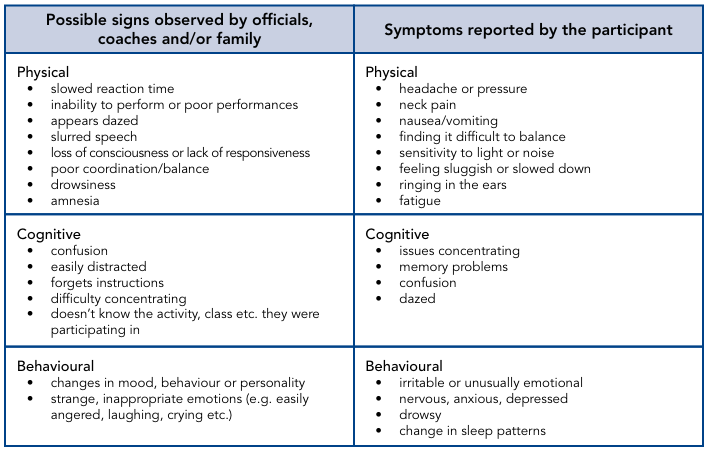
The Pocket Recognition tool (CRT5) may be used to aid assessment (see useful links section).
Ever wondered what stretches to do?
You'll be there new best friend - it involves carrots!
Understanding Fatigue
Prioritising your horse, even the best-conditioned horses can experience fatigue
Do you wonder how horses learn?
No need, we have the answer- learn from Gemma Pearson.
WHAT TO DO NEXT?
If you believe someone has suffered a concussion following a fall from a horse, or a blow to the
head, face, neck or body, take immediate action.
Always follow the four Rs…
Always follow the four Rs…
- Recognise the signs and symptoms
- Remove the injured person from the scene
- Recover until all symptoms have been resolved
- Return gradually to activity
Recognise
Immediately following a direct or indirect blow to the head, any of the following could suggest a
possible concussion:
-
Lying motionless
-
Blank or vacant expression
-
Delay in getting up
-
Disorientation or confusion
-
Facial injuries
-
Slow, laboured or wobbly movements
-
Finding it difficult to balance
The following may also start to appear over time:
-
Reduced reaction time
-
Difficulty concentrating
-
Sensory sensitivity
-
Feeling sluggish or slow
-
Drowsiness or fatigue
-
Dizziness
-
Amnesia or memory problems
-
Confusion
-
Heightened emotions
-
Slurred speech
-
Changes to mood, personality or behaviour
-
Ringing in the ears
-
Lack of responsiveness
Remove
If the person is unconscious, seek immediate help from a licensed medical professional. If one
isn’t available, dial 999 and follow the call handler’s instructions. This also applies if the person is
suffering from any of these red flag symptoms:
- Neck Pain
- Severe or worsening headache
- Double Vision
- Weakness or tingling sensation in the limbs
- Vomiting
- Loss or deterioration of consciousness
- Seizure or convulsions
- Restless, combative or agitated behaviour
Due to the risk of spinal cord injuries,
do not attempt to move the person,
or remove their riding hat or other
protective equipment, unless you’re
trained to do so. The only exception
to this is if they’re having difficulty
breathing.
If the person is conscious and showing no red flag symptoms:
1. Prevent them from getting back on their horse or continuing their activity. They must not be allowed to leave the venue by themselves, or be allowed to operate or drive a motorised or motor-assisted vehicle.
2. Contact their parent/guardian or emergency contact to notify them of the incident, then stay with them until that person arrives.
3. Monitor and document any physical, cognitive or behavioural changes they might exhibit.
4. Instruct the parent/guardian or emergency contact that the individual needs to be seen by a medical practitioner.
1. Prevent them from getting back on their horse or continuing their activity. They must not be allowed to leave the venue by themselves, or be allowed to operate or drive a motorised or motor-assisted vehicle.
2. Contact their parent/guardian or emergency contact to notify them of the incident, then stay with them until that person arrives.
3. Monitor and document any physical, cognitive or behavioural changes they might exhibit.
4. Instruct the parent/guardian or emergency contact that the individual needs to be seen by a medical practitioner.
Anyone with a concussion or suspected concussion should not:
- be left alone in the first 24 hours after the incident
- consume alcohol in the first 24 hours after the incident, and thereafter should avoid alcohol until free of all concussion symptoms
- drive a motor vehicle and or return to driving until provided with medical or healthcare
professional clearance or, if no medical or healthcare professional advice is available, should
not drive until free of all concussion symptoms.
Recover and Return
The first 48 hours are critical to recovery. The concussed person should be advised to rest for 48–72hrs and screen use should be minimised for 48hrs. This involves resting the body and the brain from:
1. Physical activities, including riding, running, cycling, swimming and any physical work.
2. Mental activities, including school work, reading, watching television and playing video games, computer work, browsing social media and using a mobile phone.
Light physical activity can then be started after the 48–72hr period and this has been shown to aid recovery. A graduated return to sport can be started once the participant has returned to normal education or work – for more information, check the ACoRN traffic light system.
IF ANY SYMPTOMS PERSIST AFTER 21 DAYS, PLEASE SEE YOUR GP
Further Information:
- Concussion and return to riding guidelines
- Standard guidelines for returning to riding

NEWSLETTER
Thank you!

BE Prepared is an initiative of the British Eventing Training Foundation
Copyright British Eventing Ltd & the British Eventing Training Foundation
© 2026
© 2026
Write your awesome label here.
Don't forget a thing!
Heading to an event? Don’t forget a thing! Take our checklist with you and be prepared for your next event.
Thank you!