
Weight Taping

Oct 8
Expert Advice from Baileys Horse Feeds, Official Feed Partner to British Eventing 

Using a weightape 
Weightapes are a simple tool to help you assess the approximate bodyweight of your horse or pony and regular weightaping is a great way of monitoring weight loss.  

  • Keep in mind that some horses can be nervous about their initial encounter with a weightape! 
  • Make sure the horse is standing square then, on their near side, keep the end of the tape in your right hand and pass the rest of the tape over the horse’s back, behind the withers. 
  • The tape needs to sit where the girth would normally go, just back from the front legs, and should be pulled snug to depress the flesh very slightly.  
  • Read the weight by overlapping the tape and reading the measurement at the arrow. 
  • Take this measurement regularly to monitor losses or gains – every two weeks is ideal. This can be recorded on the chart on page 8.  
  • Ensure that you weightape at the same time of day for each measurement to improve accuracy.  
  • Different weightapes can vary so it’s important to use the same one each time to maintain accuracy.  
  • In overweight horses, weightapes will typically slightly underestimate bodyweight, as the tape does not account for any fatty deposits over the neck or around the tailhead. Body length is also not accounted for on the tape so horses with longer backs may come up slightly lighter on the tape.  
  • If you get the opportunity to use a weighbridge, use your weightape at the same time to give you a better idea of the accuracy of your weightape for your horse as an individual.  
  • Don’t be disheartened if you don’t notice weight loss immediately, on the weightape – your horse may be losing internal fat around the abdomen that cannot be determined by the tape.   

Ever wondered what stretches to do?

You'll be there new best friend - it involves carrots!

Understanding Fatigue

Prioritising your horse, even the best-conditioned horses can experience fatigue

Do you wonder how horses learn?

No need, we have the answer- learn from Gemma Pearson.

Weight estimation formula 
If you don’t have a weightape, another option is to use the weight estimation formula. All you need is a calculator and a long tape measure that has centimetres on.  

The weight estimation formula is as follows:  

The girth can be measured by placing a tape measure around the horse’s body, immediately behind the elbow, with a reading taken following a breath out. Body length can be measured in a straight line from the point of shoulder to the point of buttock (you might need to ask a friend to help you!).  

Make sure you are taking the measurements at the same time of day each time and that your horse is standing square on a firm and level surface.  

Take this measurement regularly and record the results.

How much should my horse weigh?  
It’s very difficult to give an exact indication, in kilograms, of how much weight your horse needs to lose or what their ideal weight should be, as it varies depending on breed, conformation, muscle development and genetics. Remember that, if you have increased their workload, your horse may lose fat but gain muscle so, while the number on the scales might not change very much, they should be carrying less fat and be far healthier! For this reason, Body Condition Scoring should be performed regularly, at the same time as you measure your horse’s bodyweight – turn the page to find out more.    
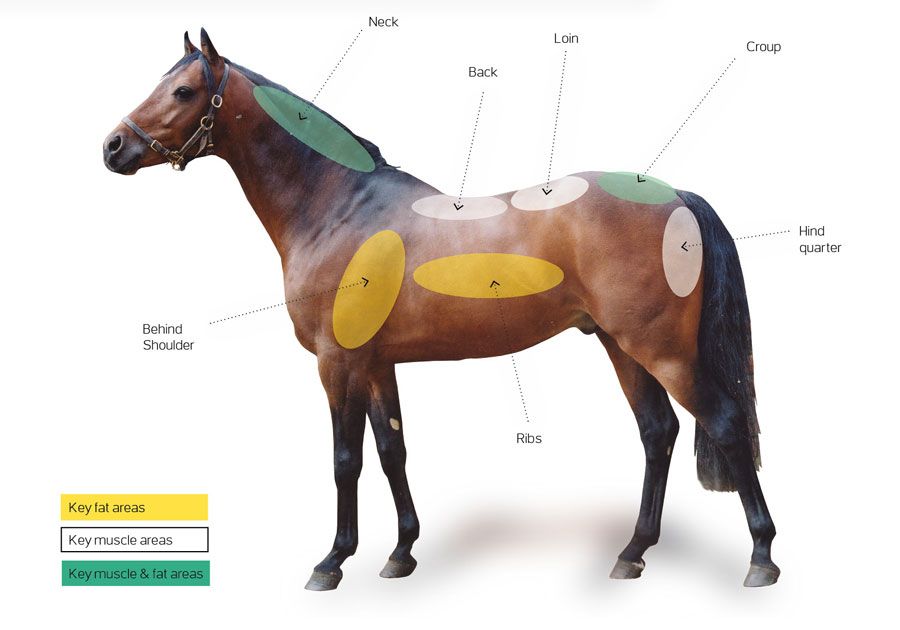
Next up is Body Condition Scoring

Ready to take the next step?

Whether you're preparing for your first event or looking to build on your experience, BE Prepared gives you free access to expert coaching videos, practical guides, downloadable checklists and event-day advice to help you train smarter and compete with confidence.