Body Condition Scoring

Oct 8
Expert Advice from Baileys Horse Feeds, Official Feed Partner to British Eventing 

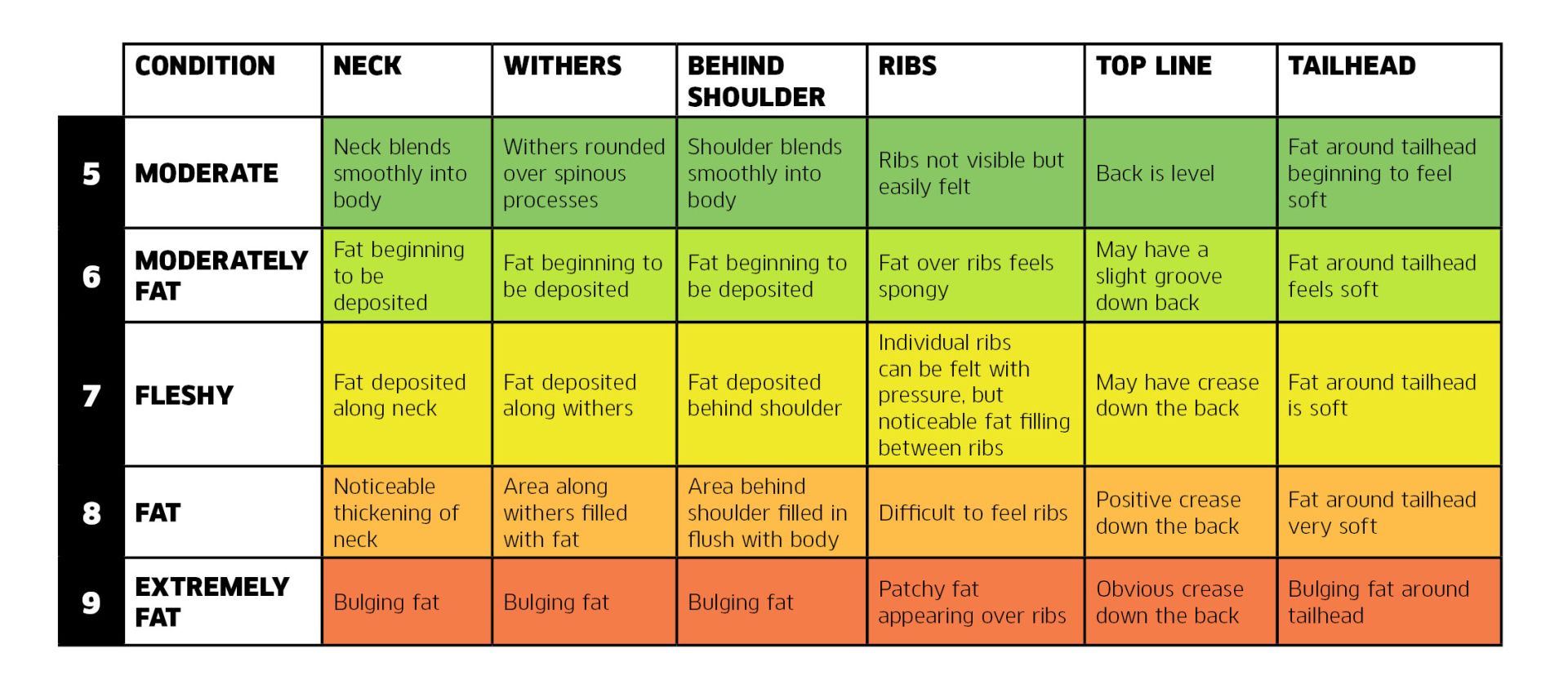
Body Condition Scoring (BCS) is a useful and objective method of assessing your horse’s overall fat covering and should be used alongside a weightape or weighbridge reading to monitor progress. Looking at the key regions indicated below, the horse can be scored on a scale of 1 to 9, with a score of 1 being “very thin” or “emaciated”, and a 9 being “extremely fat” or “obese”. Horses with a score of more than 7, out of 9, will typically have more than 20% of their bodyweight comprised of fat1. The ideal target is a score of 5, which indicates that the horse is just right and not under or overweight.  

The key areas to consider are: 

  • Neck 
  • Withers 
  • Over the shoulders 
  • Ribs 
  • Over the back  
  • Over the tailhead and the hindquarters  

These 6 areas should, ideally, be scored individually and an overall score, out of nine, assigned based on an average of all the areas (ie. add up all 6 scores and divide by 6). It is important to get “hands-on”, as well as visually assessing your horse, as this will make it easier to distinguish between fat and muscle. Remember that a very large or distended belly is not typically an indicator of fat and instead may be due to the horse eating large amounts of coarser fibre or a lack of physical fitness and core strength.  

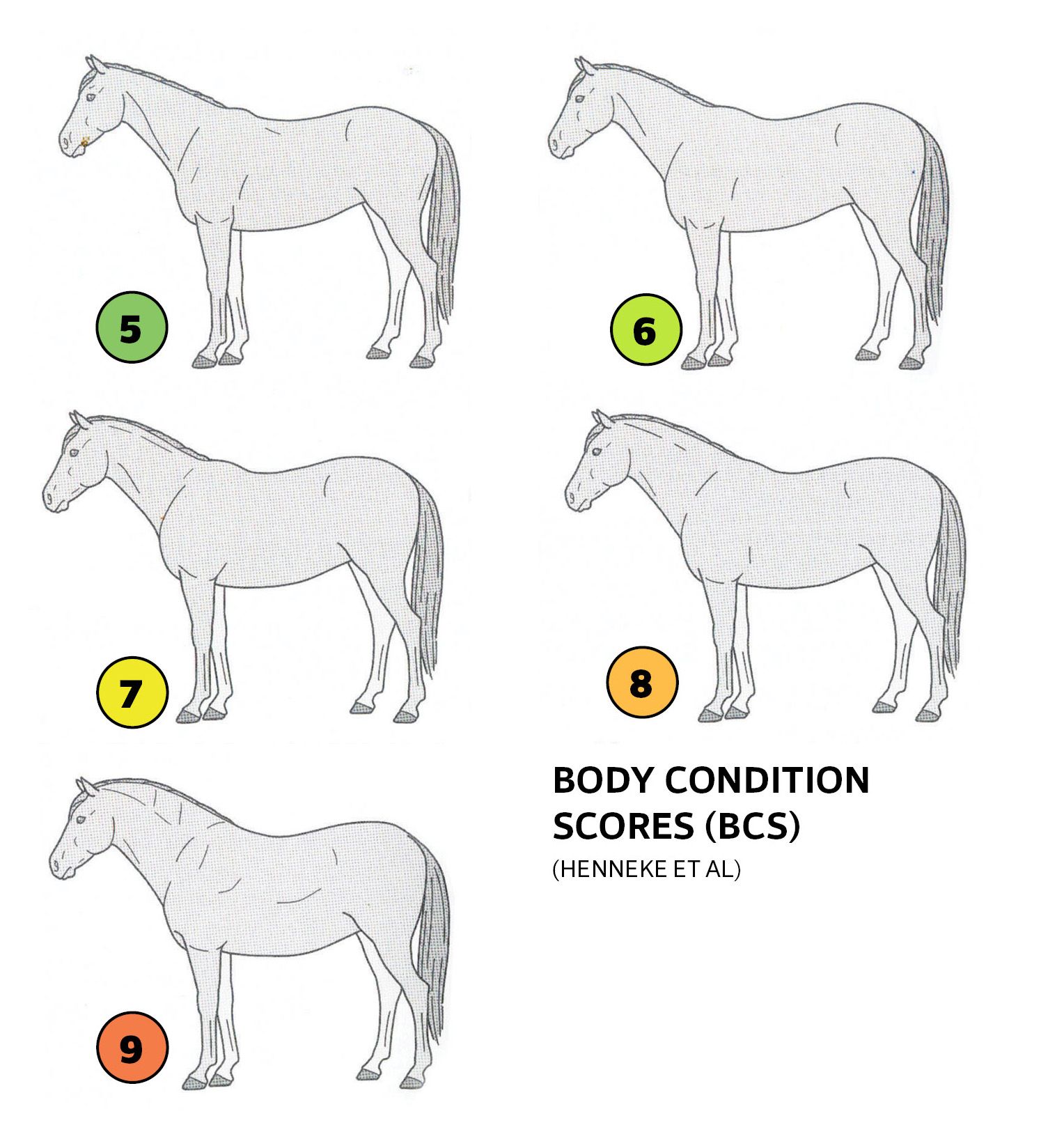
Once you have body condition scored your horse a few times, it will become easier but, if you are struggling, ask your nutritionist or vet for help. You could also team up with friends on the yard and help each other, using the table and images below as a guide.  

[Drawn images from diagram of just 5 and above]  

Request your free in-depth copy of our Body Condition Scoring leaflet, which includes Top Line and Muscle Assessment and Cresty Neck Scoring: info@baileyshorsefeeds.co.uk.  

Ever wondered what stretches to do?

You'll be there new best friend - it involves carrots!

Understanding Fatigue

Prioritising your horse, even the best-conditioned horses can experience fatigue

Do you wonder how horses learn?

No need, we have the answer- learn from Gemma Pearson.

One to nine… Or zero to five?  

You might have heard about a different body condition scoring system, using a scale of 0 (“very thin”) to 5 (“obese”). This works in a very similar way, just with different numbers, with a score of 3 representing an ideal body condition (equivalent to a score of 5 in the 1-9 system). You can use whichever scoring system you feel most comfortable with, as long as you are consistent. Just remember to clarify to your vet or nutritionist, which scoring system you have used when discussing it with them!  

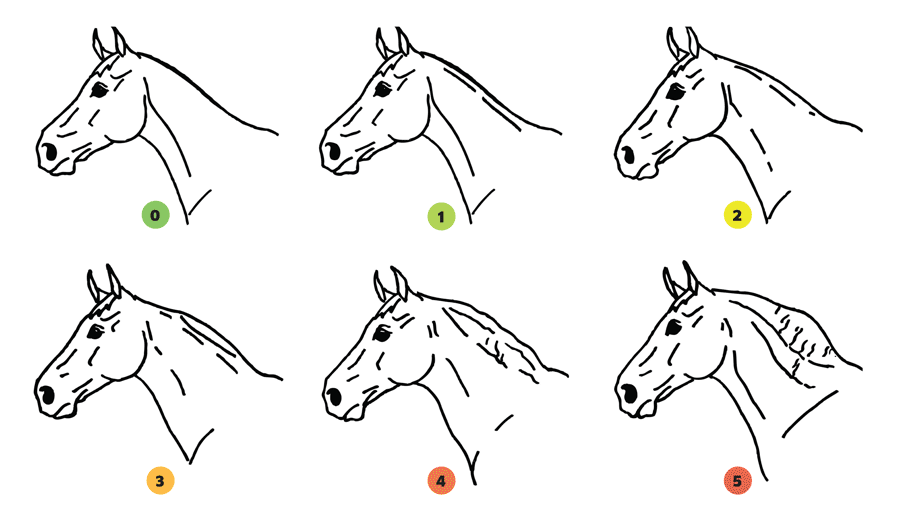
Cresty Neck Scoring 
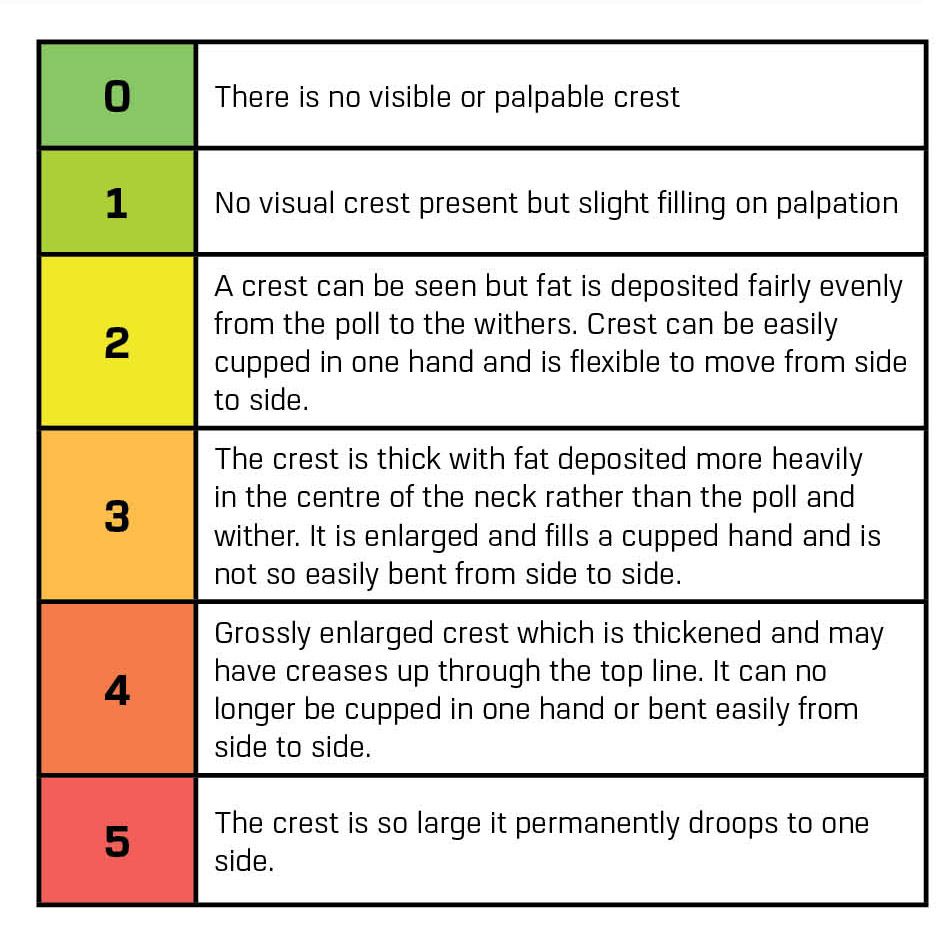
In humans, regional fat deposition, such as around the abdomen, is more closely linked to metabolic disease (eg. Diabetes) than overall body fat. This also seems to be the case for horses, with excess fat across the neck being associated with increased circulating insulin and insulin resistance, which may increase the risk of problems, such as Equine Metabolic Syndrome (EMS) Insulin Dysregulation (ID) and laminitis. For this reason, a standardised Cresty Neck Score (CNS) has been developed for objective assessment of the neck and fat deposits that are laid down here.  

It’s important to distinguish between a well-developed top line/muscly neck and one which is carrying fat so it’s vital to not only stand back and look at the horse, but also to feel and palpate the thickness and fatty deposits. Generally speaking, muscle will be harder and smooth to feel, whereas fat may be spongier.  

Cresty Neck Scores (CNS) roughly correlate with BCS scores of 5 and above, however, it’s possible for a horse to have an ideal middle and hindquarters but to still have a large cresty neck. A cresty neck score of 3 out of 5, or higher, has been found to be associated with an increased risk of laminitis, so it’s important to monitor this on a regular basis, particularly in Native breeds that may be at a greater risk of developing a cresty neck. Stallions, or male horses that have been gelded late, may have “big necks” so it’s important to ensure that this smooth muscle, rather than fat.  
Next up is Exercise

Ready to take the next step?

Whether you're preparing for your first event or looking to build on your experience, BE Prepared gives you free access to expert coaching videos, practical guides, downloadable checklists and event-day advice to help you train smarter and compete with confidence.