Advice and exercises from Great Britain’s World Class Performance Coach Chris Bartle for you to try at home. Part four looks at learning the 'what if' position.
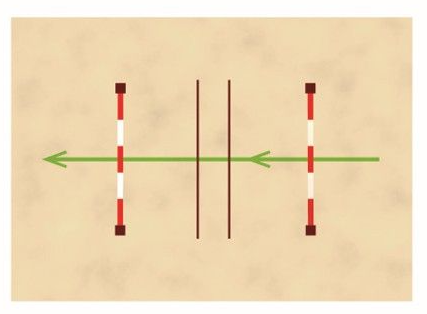
Set up a simulated rail-ditch-rail combination using two verticals separated by two poles on the ground for the ‘ditch’. The distance is not important.
I talk about having four positions. Position one is racing position with the rider’s weight out of the saddle; position two is the light seat where the rider’s seat is closer to the saddle but his upper body is more upright; position three is the dressage seat, which is upright and in contact with the horse; and position four is the safety – or the ‘what if’ – position.
The ‘what if’ position is where the rider is slightly behind the horse’s centre of gravity. It’s the position you need to adopt in case the horse spooks, chips in or leaves a leg; when you’re not sure how he will react. You should have a preparation point for every fence. This is a point on the approach where you adopt the correct position for the type of obstacle. For a fence like this you need to be in position four – the ‘what if’ position – with most of the horse in front of you. In this position you will need to have a slightly longer rein so that you’re not being pulled forward or interfering with the horse’s balance.